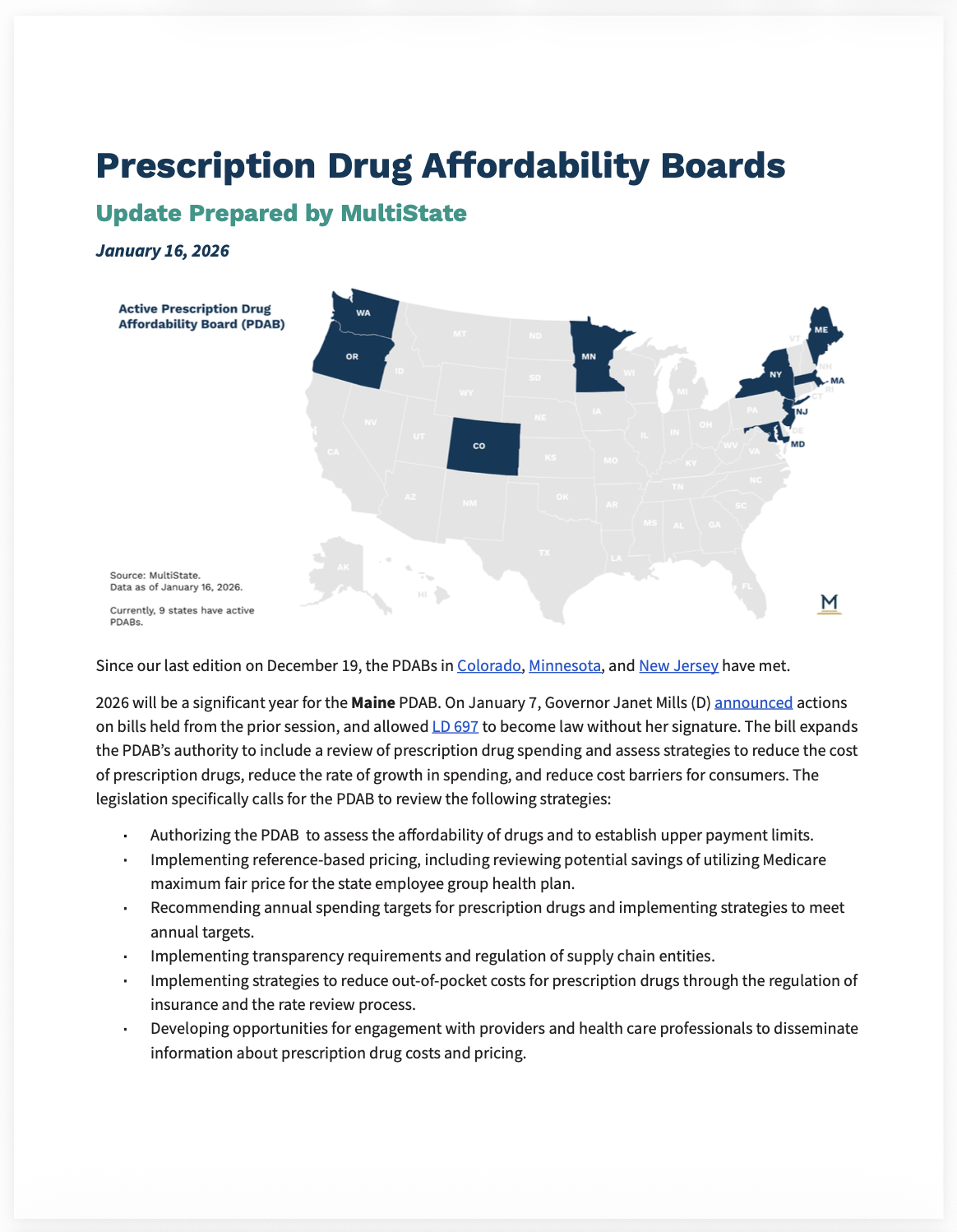
Prescription Drugs and PDABs
Prescription drug pricing has been a concern of state lawmakers for years, and prescription drug affordability boards (PDABs) have emerged as a strategy to attempt to control costs for consumers. Eleven states have enacted PDABs or similar drug pricing committees. Statutes vary by state, but in general PDABs are tasked with evaluating and monitoring prescription drug costs in the state. Several PDABs are authorized to conduct affordability reviews on high cost prescription drugs and set upper payment limits (UPLs) on those drugs.
What is a Prescription Drug Affordability Board (PDAB)?
A Prescription Drug Affordability Board (PDAB) is a state entity tasked with addressing prescription drug costs for the state and consumers. These entities are composed of appointed individuals with expertise in healthcare and the pharmaceutical supply chain and are usually accompanied by a stakeholder advisory council with whom the PDAB consults. PDAB authority varies by state, and can include making policy recommendations, creating reports, conducting affordability reviews, and/or setting upper payment limits (UPLs)
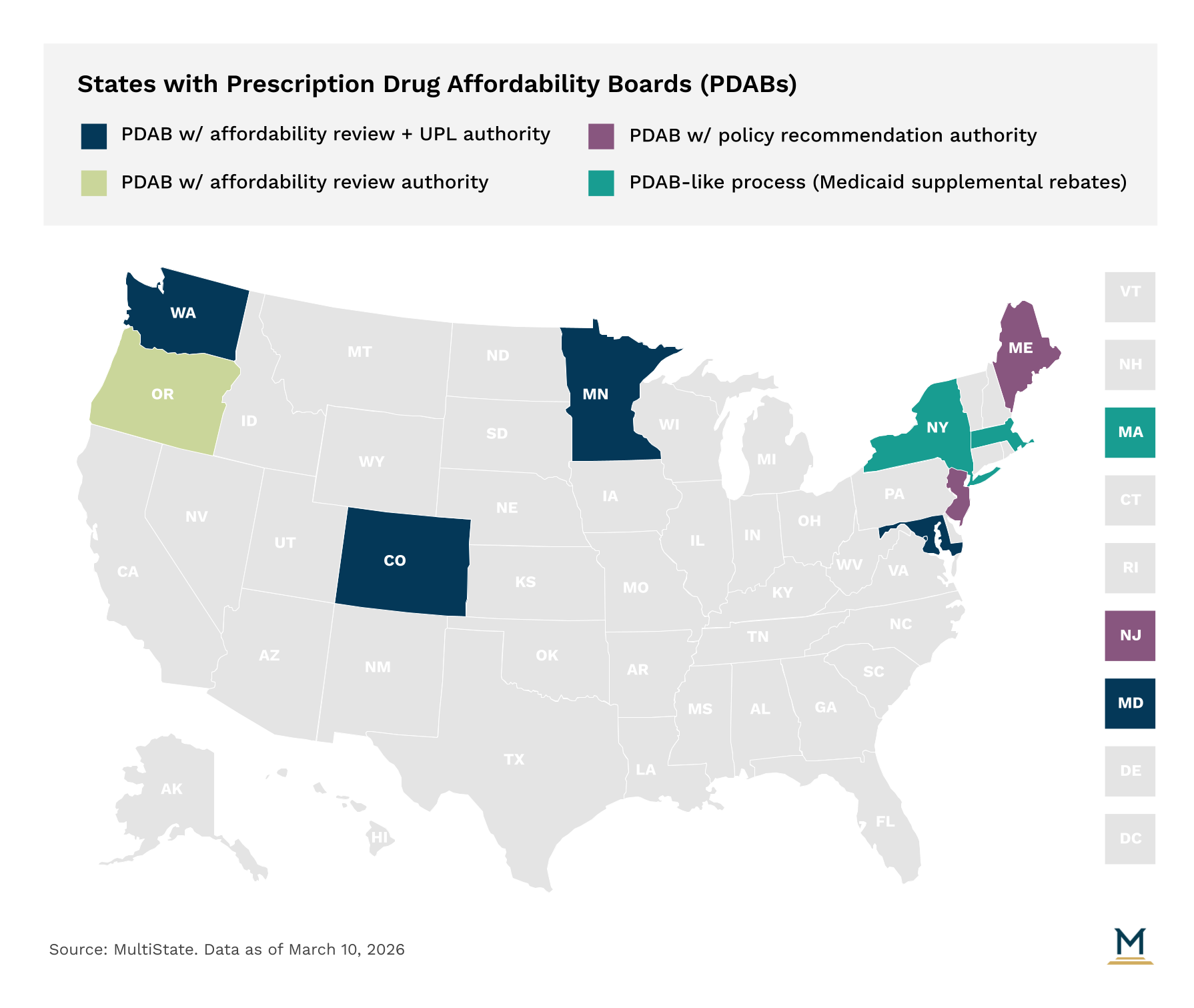
Which states have PDABs? What authorities do they have?
Eleven states have enacted PDABs or similar drug pricing committees. Each state differs in what authorities are granted to the PDAB:
Colorado, Maryland, Minnesota, and Washington. PDABs can conduct affordability reviews of eligible drugs and set UPLs.
Oregon: PDAB can conduct affordability reviews of eligible drugs.
Maine and New Jersey: PDASB can evaluate and make policy recommendations related to prescription drug pricing
Massachusetts: If the Executive Office of Health and Human Services cannot negotiate supplemental rebate agreements with drug manufacturers, the manufacturer may be referred to the Health Policy Commission (HPC) to review the value of the drug and propose a supplemental rebate.
New York: Medicaid can refer drugs to the Drug Utilization Review Board (DURB) to negotiate supplemental rebates if spending on a drug that is expected to exceed the Medicaid drug cap or if a newly launched drug meets certain thresholds.
What is the PDAB Affordability Review Process and what are Upper Payment Limits (UPLs)?
Some PDABs are tasked with identifying high-cost drugs that meet thresholds set in statute for affordability review. During affordability reviews, PDABs analyze drug pricing metrics, spending trends, utilization data, and stakeholder input to determine if a drug poses an affordability challenge. For states with upper payment limit (UPL) authority, the PDAB may choose to set a UPL on a drug that poses an affordability challenge. UPLs cap the amount that purchasers and payers within a state can be required to pay for a drug when dispensed or administered in the state. UPLs have been a central point of debate in the PDAB with questions around legal authority, enforcement, and market impact.
Need Help Tracking PDAB Activity?
StateVitals maintains an official PDABs monitoring apparatus, which brings regular updates from PDAB meetings along with intel on which states might establish additional PDABs. Click the image below for a preview of our PDAB resources.