
Key Takeaways
- The Rural Health Transformation Program provides $50 billion to states from 2026 through 2030, with CMS distributing half evenly among participants and the other half based on rural population size and healthcare facility needs.
- States must submit progress reports and Year 2 plans to CMS by August 31, covering more than 450 grants awarded in the first six months of the program.
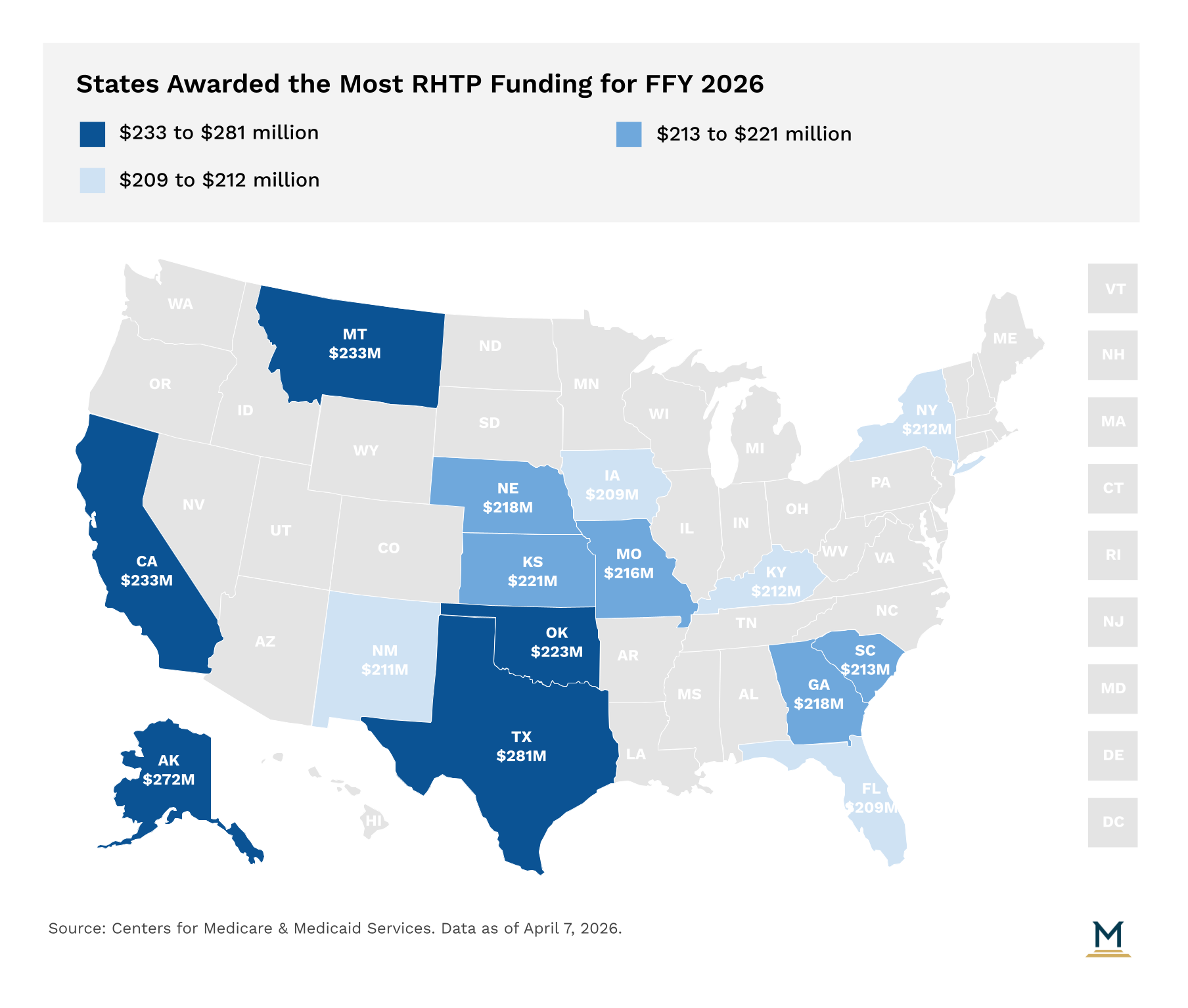
- Each state received between $147 million and $282 million in rural health funding for the first year and must fully spend these allocations by October 31 to avoid recoupment and potential reductions in future funding.
- CMS may adjust subsequent funding levels based on first-year outcomes and state compliance with program commitments, making the upcoming progress reports essential for understanding how these resources are improving rural healthcare access.
Program Overview and Funding Allocation
Spanning fiscal years 2026 through 2030, the Rural Health Transformation Program (RHTP) provides $50 billion to approved states, providing $10 billion in funding annually. The Centers for Medicare & Medicaid Services (CMS) divides half of these funds evenly among all participating states and distributes the remaining 50% based on specific criteria, such as rural population size, the prevalence of rural health facilities, and the needs of particular state hospitals. Following the initial fund distribution earlier this year, states spent the spring and summer releasing Requests for Proposals (RFPs) and Requests for Applications (RFAs) to allocate their funding before the fiscal year concludes.
Upcoming Deadlines and Reporting Requirements
August 31 Progress Reports and Year 2 Plans
States must submit qualitative end-of-year progress reports to CMS, detailing the more than 450 grants awarded over the preceding six months. Concurrently, states must submit their Year 2 plans for CMS approval. CMS may adjust funding allocations for subsequent years based on first-year outcomes, compliance with state commitments to CMS, and other evaluative factors.
October 31 End-of-Fiscal-Year Reports
By the close of the fiscal year, states must deliver a quantitative financial report specifying exact expenditures, funded initiatives, and recipient vendors or providers. States must fully expend all allotted funds—ranging between $147 million and $282 million per state—by this date. Any unspent balances risk recoupment by CMS, which could negatively impact future funding levels.
Program Evaluation and Outlook
States are actively evaluating the overall efficacy of their respective initiatives, and plan adjustments are anticipated as best practices and lessons learned emerge over time. Although the grantmaking process itself is transparent, a comprehensive view of the program's holistic impact remains limited. Public access to the upcoming end-of-year progress reports from CMS or individual states will be essential for understanding how these financial resources are improving rural community outcomes.
Track Health Care Policy
The ever-evolving state health policy landscape will continue to influence how health care organizations make business decisions. MultiState's team pulls from decades of expertise to help you effectively navigate and engage. MultiState's team understands the issues, knows the key players and organizations, and we harness that expertise to help our clients effectively navigate and engage on their policy priorities. We offer customized strategic solutions to help you develop and execute a proactive multistate agenda focused on your company's goals. Learn more about our Health Care Policy Practice.
Rural Health Transformation Program
The Rural Health Transformation Program (RHTP) is a federal initiative spanning fiscal years 2026 through 2030 that provides $50 billion to approved states to improve healthcare access and infrastructure in rural communities. CMS distributes $10 billion annually, with half allocated evenly among participating states and the remaining half based on rural population size, healthcare facility prevalence, and specific hospital needs.
Frequently Asked Questions
What is the Rural Health Transformation Program and how much funding does it provide?
The Rural Health Transformation Program (RHTP) is a federal initiative spanning fiscal years 2026 through 2030 that provides $50 billion to approved states, distributing $10 billion annually. CMS divides half of the funds evenly among participating states and allocates the remaining 50% based on criteria including rural population size, prevalence of rural health facilities, and specific hospital needs. Individual state allocations range between $147 million and $282 million per year.
When are states required to submit their Year 2 plans for the Rural Health Transformation Program?
States must submit their Year 2 plans to CMS by August 31, along with qualitative end-of-year progress reports detailing the more than 450 grants awarded during the first six months. CMS may adjust funding allocations for subsequent years based on first-year outcomes, compliance with state commitments, and other evaluative factors.
What happens if states don't spend all their Rural Health Transformation Program funding by the deadline?
States must fully expend all allotted funds by October 31, the end of the fiscal year, or risk recoupment by CMS. Any unspent balances could negatively impact future funding levels for those states. States must also deliver a quantitative financial report by this date specifying exact expenditures, funded initiatives, and recipient vendors or providers.
How does CMS distribute Rural Health Transformation Program funds to states?
CMS divides the annual $10 billion allocation by distributing half evenly among all participating states and the remaining 50% based on specific criteria. The criteria-based distribution considers factors such as rural population size, the prevalence of rural health facilities, and the needs of particular state hospitals.
What reporting requirements do states have for CMS rural health funding in 2026?
States face two major reporting deadlines: August 31 for qualitative progress reports and Year 2 plans, and October 31 for quantitative financial reports. The August reports must detail the more than 450 grants awarded over the preceding six months, while the October reports must specify exact expenditures, funded initiatives, and recipient vendors or providers.