
States Begin Medicaid Work Requirements Implementation Ahead of 2027 Deadline
Key Takeaways
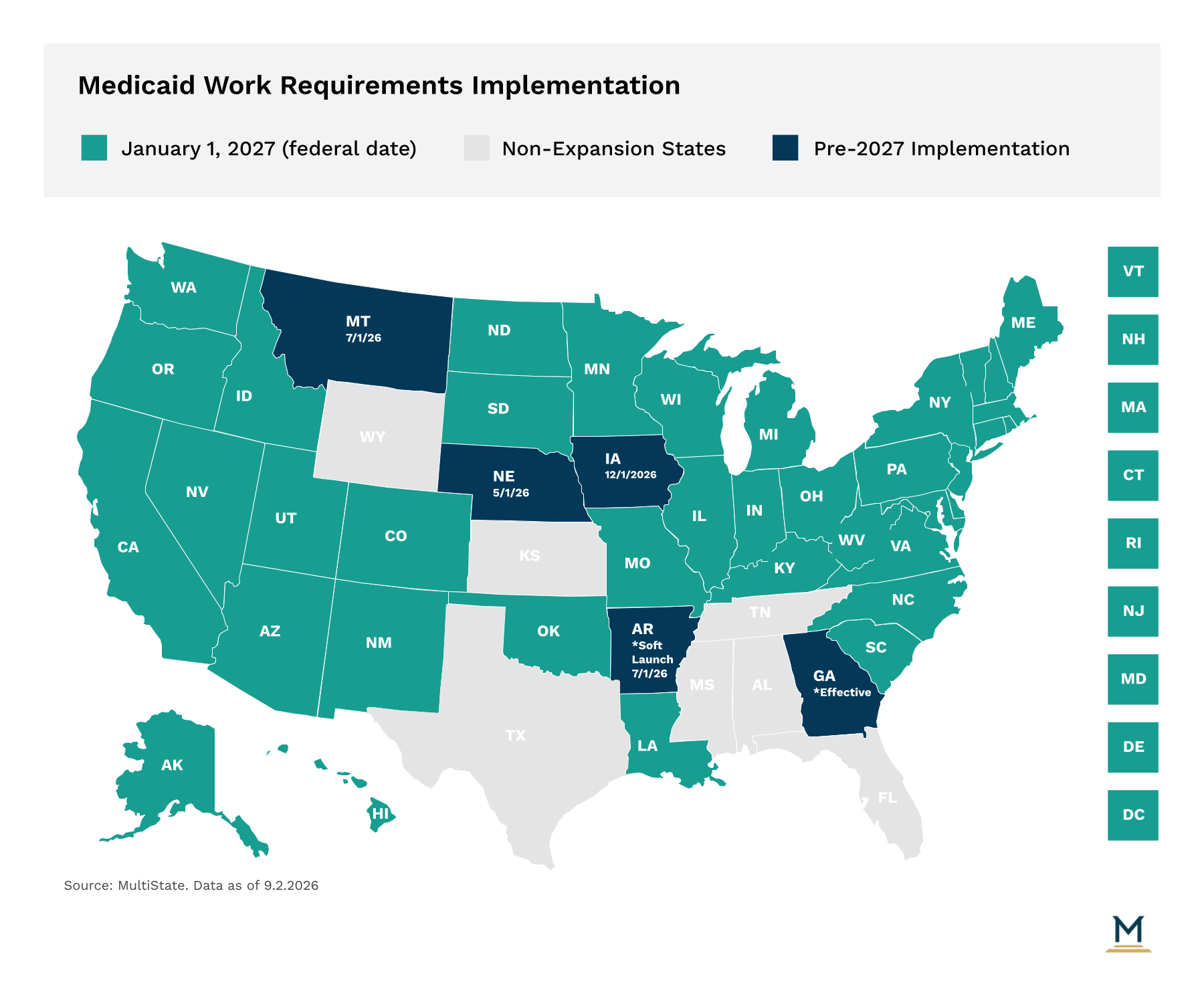
- Montana and Nebraska began implementing Medicaid work requirements in July 2026, ahead of the federal January 2027 deadline that will require community engagement for Medicaid eligibility nationwide.
- Arkansas launched a soft rollout focused on beneficiary education and connecting people to qualifying activities rather than immediately terminating coverage for noncompliance.
- A federal judge declined to pause the January 2027 implementation timeline despite ongoing litigation from 25 states and DC challenging CMS provisions on exemptions and documentation requirements.
- States planning to use a three-month look-back period to assess compliance began beneficiary outreach in July, making operational decisions about data matching, exemptions, and eligibility systems that will shape how the requirements work in practice.
July marked a shift from policymaking to implementation as states continued preparing for the federal Medicaid community engagement requirements scheduled to take effect nationwide on January 1, 2027. Montana began implementing its requirements July 1, joining Nebraska among states moving ahead of the federal deadline, while Arkansas launched a "soft rollout" focused initially on beneficiary education, outreach, and connections to qualifying activities rather than coverage terminations. July also represented an important operational milestone for other states: those planning to use the maximum three-month look-back period to assess compliance at application needed to begin beneficiary outreach during the month. States are now making consequential decisions about look-back periods, data matching, exemptions, reporting processes, and eligibility systems that will determine how the federal requirements operate in practice.
Implementation is proceeding amid ongoing litigation over the federal framework. Twenty-five states and the District of Columbia sued CMS in late June over its interim final rule, challenging provisions governing exemptions and documentation requirements. At the end of July, however, a federal judge declined to pause implementation while the case proceeds. The decision leaves the federal timeline intact, meaning states must continue preparing for January 2027 even as the legal challenge remains unresolved. With relatively little new state legislative activity during July, the key developments increasingly are administrative: how quickly states build their systems, how they identify exemptions and verify qualifying activities, and how effectively they communicate the new requirements to beneficiaries.
Track Health Care Policy
The ever-evolving state health policy landscape will continue to influence how health care organizations make business decisions. MultiState's team pulls from decades of expertise to help you effectively navigate and engage. MultiState's team understands the issues, knows the key players and organizations, and we harness that expertise to help our clients effectively navigate and engage on their policy priorities. We offer customized strategic solutions to help you develop and execute a proactive multistate agenda focused on your company's goals. Learn more about our Health Care Policy Practice.
Medicaid Community Engagement Requirements
Medicaid community engagement requirements, also known as work requirements, mandate that certain Medicaid beneficiaries participate in qualifying activities such as employment, job training, education, or volunteer work to maintain their eligibility for coverage. The federal government has established a nationwide implementation date of January 1, 2027, requiring states to verify beneficiary compliance through reporting processes and data matching systems. States have flexibility in determining look-back periods, exemption categories, and documentation requirements within the federal framework.
Frequently Asked Questions
Which states have already started implementing Medicaid work requirements before the January 2027 federal deadline?
Montana and Nebraska have begun implementing Medicaid community engagement requirements ahead of the January 1, 2027 federal deadline, with Montana starting its implementation on July 1, 2026. Arkansas has also launched a "soft rollout" that initially focuses on beneficiary education, outreach, and connecting individuals to qualifying activities rather than immediately terminating coverage for non-compliance.
What is the three-month look-back period for Medicaid work requirements compliance?
The three-month look-back period is the maximum timeframe states can use to assess whether beneficiaries have met community engagement requirements when they apply for or renew Medicaid coverage. States planning to use this maximum look-back period needed to begin beneficiary outreach in July 2026 to properly evaluate compliance at the January 2027 implementation date.
What is the current status of the CMS Medicaid work requirements litigation?
Twenty-five states and the District of Columbia filed a lawsuit against CMS in late June 2026 challenging the interim final rule on Medicaid work requirements, specifically targeting provisions related to exemptions and documentation requirements. A federal judge declined to pause implementation at the end of July 2026, meaning states must continue preparing for the January 2027 deadline while the legal challenge remains unresolved.
What administrative decisions are states making for Medicaid community engagement requirements implementation?
States are making operational decisions about look-back periods for compliance assessment, data matching systems, exemption criteria, reporting processes, and eligibility system modifications. These administrative choices will determine how the federal Medicaid work requirements function in practice when they take effect in January 2027.
Do Medicaid work requirements apply to all beneficiaries starting January 2027?
The federal Medicaid community engagement requirements are scheduled to take effect nationwide on January 1, 2027, but states are establishing various exemption categories as part of their implementation frameworks. The specific exemptions and how states identify and document them are among the key administrative decisions being made during the current implementation phase.