
State Health Policy Action We're Watching in October 2026
Key Takeaways
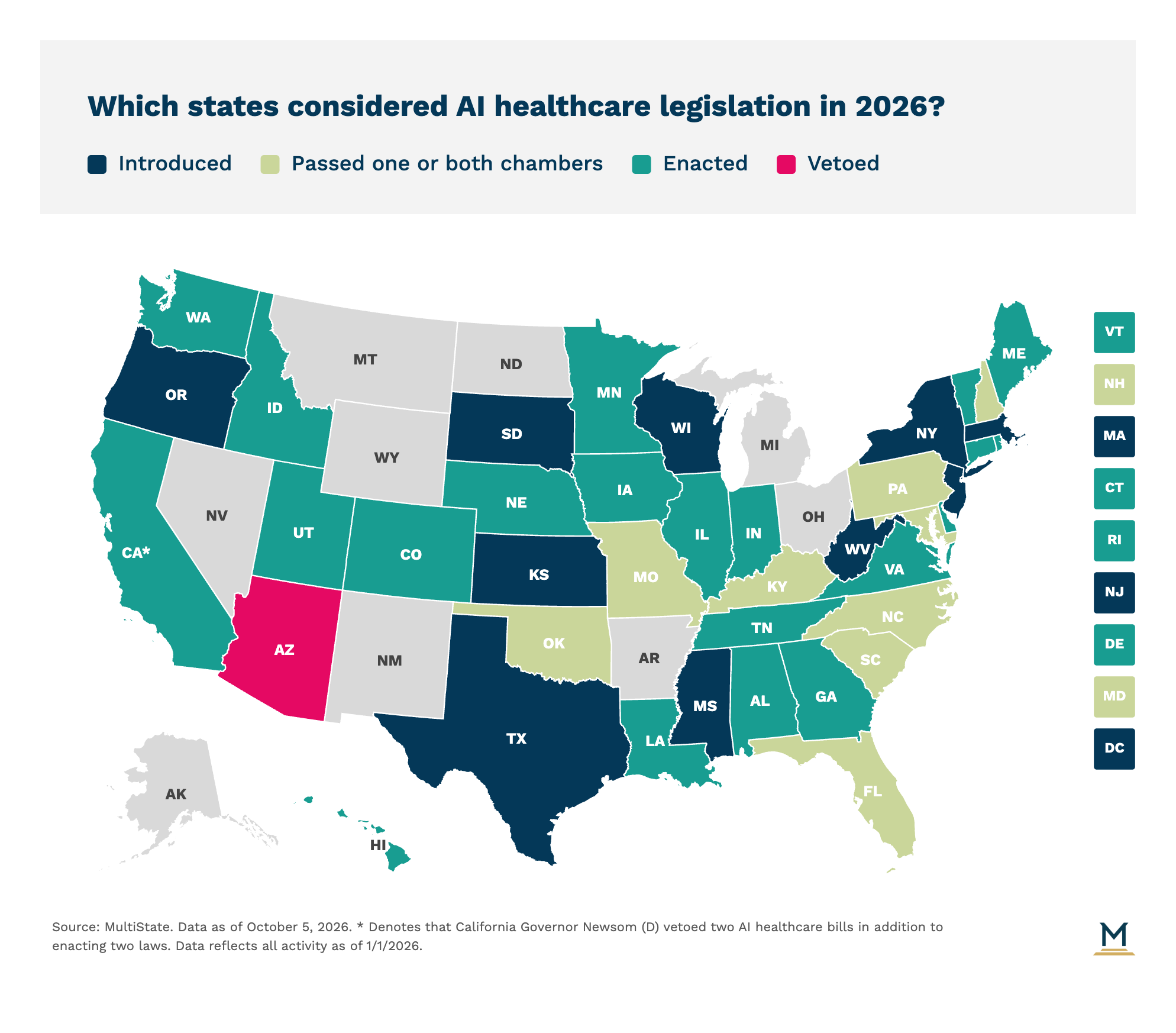
- California enacted two bills regulating AI in healthcare, with AB 1979 prohibiting AI from independently performing clinical functions and SB 503 requiring developers to identify systems that risk biased decision-making.
- Arkansas pharmacies sued a PBM for allegedly violating state law requiring reimbursement at no less than the National Average Drug Acquisition Cost, while the Eighth Circuit heard arguments on a separate challenge to Arkansas Act 624, which prohibits PBM pharmacy ownership.
- Connecticut's comptroller announced new policies governing insurers' use of AI in state employee health plans and plans to work with the legislature in 2027 to extend these policies to all state-regulated insurance plans.
- The FDA extended its safety review of mifepristone to March 2027, which could affect pending litigation in Texas where a federal judge set a December 1, 2026 deadline for proceedings that challenge the drug's approval.
- CMS restored nearly $12 billion in Medicaid funding to Texas hospitals after stopping supplemental payments on September 1 due to a dispute over how the state calculated provider taxes under new federal rules.
Arkansas Pharmacies Challenge PBM Reimbursement Practices
On September 15, 12 Arkansas pharmacies sued a pharmacy benefit manager (PBM) in a federal court, alleging the company underpaid them for prescription medications. The plaintiffs accused the PBM of violating Act 900 (2015), which requires PBMs to reimburse Arkansas pharmacies at no less than the drug's National Average Drug Acquisition Cost (NADAC). In recent years, Arkansas has passed substantial, highly litigated PBM and pharmacy reform legislation, including Act 624 (2025), which prohibits PBM pharmacy ownership. The same PBM challenged the law, and the Eighth Circuit heard oral arguments regarding its preliminary injunction on September 22.
California Enacts AI Healthcare Regulations
On September 30, Governor Gavin Newsom (D) enacted bills regulating AI use in healthcare. AB 1979 prohibits AI from independently performing any clinical function or decision. Additionally, SB 503 requires AI developers and deployers to make reasonable efforts to identify AI systems that pose a risk of biased healthcare decision-making. These bills expand California's regulatory authority over AI use, which could increase the likelihood that other states adopt similar reforms in coming years.
Connecticut Announces AI Policies for Health Insurers
On September 16, Comptroller Sean Scanlon (D) announced new policies governing health insurers' use of AI when providing benefits through the state's employee health plans. Critically, Comptroller Scanlon intends to work with the legislature in 2027 to extend the policies to all state-regulated insurance plans. These policies could open the door to broader reforms by banning the use of member data to train models, requiring disclosure when interacting with AI, imposing reporting requirements, and prohibiting the use of AI for adverse determinations, downcoding, reducing provider payments, and altering billing codes.
FDA Extends Mifepristone Safety Review Timeline
On October 7, the U.S. Food and Drug Administration (FDA) stated it expects to complete its safety review of mifepristone by March 2027, extending past the previous review timeline of December 2026. Several cases challenging the FDA's approval of mifepristone and its removal of in-person dispensing requirements await the results of the routine safety review. Notably, a federal judge in Texas granted the FDA's request to stay a lawsuit seeking to revoke its approval of mifepristone altogether, but set a deadline of December 1, 2026, or until the safety review is completed. Due to the delay, the Texas proceedings could resume on December 1.
Texas Secures Restoration of Medicaid Hospital Funding
On September 17, Governor Greg Abbott (R) announced that the Centers for Medicare & Medicaid Services (CMS) restored nearly $12 billion in Medicaid funding to Texas hospitals following months of negotiations. CMS stopped the supplemental funding on September 1, the first time since it began in 2014, leaving hospitals slated to lose $27 million a day. CMS' decision stemmed from a dispute with Texas over how the state calculated provider taxes for hospitals as new federal rules phase in limits on state-directed payments in the coming year. Governor Abbott's announcement was unclear on how the funds will be calculated or distributed moving forward and whether providers will receive back pay for previously unauthorized payments.
Track Health Care Policy
The ever-evolving state health policy landscape will continue to influence how health care organizations make business decisions. MultiState's team pulls from decades of expertise to help you effectively navigate and engage. MultiState's team understands the issues, knows the key players and organizations, and we harness that expertise to help our clients effectively navigate and engage on their policy priorities. We offer customized strategic solutions to help you develop and execute a proactive multistate agenda focused on your company's goals. Learn more about our Health Care Policy Practice.
National Average Drug Acquisition Cost (NADAC)
The National Average Drug Acquisition Cost is a benchmark published weekly by the Centers for Medicare & Medicaid Services that reflects the average price pharmacies pay to acquire prescription drugs. Several states, including Arkansas, use NADAC as a floor for PBM reimbursement rates to ensure pharmacies are not paid less than their actual drug acquisition costs.
Pharmacy Benefit Manager (PBM)
A pharmacy benefit manager is a third-party administrator that manages prescription drug benefits on behalf of health insurers, employers, and government programs. PBMs negotiate drug prices with manufacturers, develop formularies, and reimburse pharmacies for dispensed medications, giving them significant influence over drug costs and access throughout the supply chain.
State-Directed Payments
State-directed payments are a mechanism within Medicaid managed care that allows states to require managed care organizations to make specific payments to providers, often supplementing base rates to support hospitals and other safety-net providers. New federal rules are phasing in limits on how states can structure these payments, which was at the center of the dispute between Texas and CMS over hospital funding.
Frequently Asked Questions
What does California AB 1979 prohibit AI from doing in healthcare?
California AB 1979 prohibits AI from independently performing any clinical function or decision. Governor Gavin Newsom enacted this bill on September 30 alongside SB 503, which requires AI developers and deployers to make reasonable efforts to identify AI systems that pose a risk of biased healthcare decision-making.
What restrictions does Connecticut's comptroller want to place on insurers' use of AI?
Comptroller Sean Scanlon announced policies that would ban the use of member data to train models, require disclosure when interacting with AI, impose reporting requirements, and prohibit the use of AI for adverse determinations, downcoding, reducing provider payments, and altering billing codes. Scanlon intends to work with the legislature in 2027 to extend these policies beyond the state's employee health plans to all state-regulated insurance plans.
What does Arkansas Act 900 require pharmacy benefit managers to do when reimbursing pharmacies?
Arkansas Act 900 (2015) requires PBMs to reimburse Arkansas pharmacies at no less than the drug's National Average Drug Acquisition Cost (NADAC). Twelve Arkansas pharmacies cited this law in a federal lawsuit filed on September 15 against a PBM they accused of underpaying them for prescription medications.
What does Arkansas Act 624 prohibit, and is it currently being challenged in court?
Arkansas Act 624 (2025) prohibits PBM pharmacy ownership. A PBM challenged the law, and the Eighth Circuit heard oral arguments regarding its preliminary injunction on September 22.
When does the FDA expect to complete its safety review of mifepristone, and what happens to pending litigation in the meantime?
The FDA stated on October 7 that it expects to complete its safety review of mifepristone by March 2027, extending past the previous review timeline of December 2026. A federal judge in Texas granted the FDA's request to stay a lawsuit seeking to revoke mifepristone's approval altogether but set a deadline of December 1, 2026, or until the safety review is completed, meaning the Texas proceedings could resume on December 1 due to the delay.